
Category: Featured Blog

    • The Rise of Multisensory Branding

      The Rise of Multisensory Branding

      Picture this: you walk into an Abercrombie store, and the smell hits you before you even spot the clothes. Or the slow, satisfying slide of an Apple box as you unbox a new phone.

      That’s multisensory branding at work, a strategy that goes way beyond logos and fonts to create emotional brand connections you can actually feel.

      Brands are finally realising: being seen isn’t enough. Sight may introduce your brand, but the senses make it unforgettable.

      What Is Multisensory Branding?

      Multisensory branding is the art of designing brand experiences that hit more than one sense-sight, sound, touch, smell, and sometimes taste.

      Instead of a single logo, think of it as a sensory signature. Your audience may forget what your ad looked like, but they’ll remember the sound of your app notification or the scent of your store.

      Example: Singapore Airlines uses a custom fragrance in its cabins and crew uniforms. That smell is now shorthand for “luxury travel.”

      Why Emotional Brand Connection Beats Pretty Logos

      Smell and sound bypass logic and go straight to emotion. Science says humans are 100 times more likely to remember a smell than a sight. One whiff or sound, and boom-your brand is instantly recalled.

      Rolls-Royce even adds a signature scent to its car interiors to make every new car smell like a classic Rolls. That’s branding at a subconscious level: emotion first, logo second.

      Sensory Branding Strategies That Actually Work

      Here’s how brands are using sensory branding strategies to stand out:

      Scented Logos: Starbucks stores smell like coffee heaven. That’s branding through aroma.

      Sound and Touch in Branding: Bang & Olufsen spent months engineering the perfect “click” of their volume dials.

      Packaging Texture: Chanel uses soft-touch finishes and heavy lids to make you feel luxury before you even open the product.

      None of this is random. Every sense is carefully designed to make you feel something.

      Storytelling in Multisensory Branding

      Good branding tells a story, but great branding makes you feel it.

      Take Lush: you can smell their stores from down the street. That’s not an accident, it’s part of their eco-friendly, playful brand story.

      Or Harley-Davidson, which went as far as trademarking their engine sound. That roar doesn’t just say “motorcycle”-it says “freedom.”

      Tactile Branding: Let People Feel Your Story

      Touch is a branding superpower most companies ignore. The texture of a package, the weight of a product, even the way a box opens creates a memory.

      Example: Montblanc pens feel substantial in your hand. That weight screams “premium.”

      Apple’s slow, smooth unboxing experience isn’t just pretty, it’s designed to make the product feel worth every rupee.

      Smell in Branding: The Most Underrated Tool

      Smell is branding’s secret weapon. It’s emotional, instant, and impossible to ignore.
      Cinnabon places ovens near the front so the scent pulls you in.

      Nike makes their stores smell like new shoes-because nostalgia sells.

      Westin Hotels has a signature “white tea” scent that makes every hotel feel like home.

      This is smell in branding at its best-subtle, powerful, and unforgettable.

      Scented Logos Are a Real Thing

      A scented logo is just like a visual logo, but for your nose. A custom scent becomes a brand’s signature. Luxury hotels and retailers are already investing heavily in scent marketing because smell creates trust and recognition faster than any ad ever could. even a video intro.

      Why This Matters in 2025

      We’re living in a hyper-visual world. Logos, ads, and content are everywhere. The brands that win are the ones that appeal to all senses.Sound and touch in branding give your brand personality. Smell adds depth. And together, these create a memory your audience won’t scroll past.

      The Takeaway

      Branding isn’t just what people see; it’s what they feel, hear, and smell.

      Smart companies are using tactile branding, scented logos, and other sensory branding strategies to create a full experience that builds emotional brand connections customers can’t forget.

      So, next time you plan a campaign, don’t just ask, “Does it look good?” Ask, “Does it feel good? Does it smell like us? Does it sound like us?” That’s how you create a brand no one forgets.

    • Sonic Branding: Why the Future of Identity Is Heard, Not Just Seen

      Sonic Branding: Why the Future of Identity Is Heard, Not Just Seen

      Close your eyes. What brand comes to mind when you hear a cheerful “ba-da-ba-ba-baa”? Or that iconic Netflix “ta-dum” before a new series begins? That’s not just sound. That’s strategy. That’s sonic branding. In a world where digital spaces are crowded with logos and visuals, brands are learning that identity isn’t only seen, it’s heard.

      What Is Sonic Branding?

      Simply put, sonic branding (or brand sound identity) is the strategic use of sound to represent a brand’s personality, values, and promise. Think of it as the audio version of a logo. Instead of a visual mark, it’s a melody, a tone, or even a rhythm that sticks in your memory.
      Intel’s iconic five-note jingle.

      Mastercard’s global sonic branding strategy, which plays the same sound cue in over 36 million retail environments.

      Even the “whoosh” sound you hear when sending an email on Apple devices.

      These are more than quirks, they’re brand assets.

      The Psychology of Sonic Branding

      Why does it work so well? Because our brains process sound faster than visuals. Studies show that humans respond to audio cues in 0.146 seconds, compared to 0.25 seconds for visuals. That’s a marketer’s dream: faster recall, stronger emotion.

      The psychology of sonic branding lies in how sound bypasses logic and goes straight for emotion. It triggers nostalgia, builds trust, and sets expectations before you even see the brand name.

      Example: When you hear HBO’s static “aaaaaaah” chord, you don’t just think of the brand, you anticipate high-quality storytelling.

      Sonic Branding in Advertising

      Here’s the truth: visuals can be skipped, muted, or scrolled past. Sounds? Much harder to ignore.
      That’s why sonic branding in advertising has skyrocketed.

      Take Coca-Cola’s “open–fizz–ahh”. No logos, no faces, just sound. You could be on radio or in a crowded shop and still know it’s Coke.

      Or look at Indian brands: Zomato’s delivery app chime. These sounds sneak into daily routines, becoming part of culture.

      Sonic Branding Strategy: Beyond Jingles

      A solid sonic branding strategy isn’t about creating a catchy tune and calling it a day. It’s about weaving sound into the entire brand ecosystem:

      Multisensory branding: Combine visuals, sounds, and even haptics (think of Tesla’s subtle engine hum designed for pedestrians).

      Consistency: Mastercard didn’t stop at ads; their sonic logo plays in-store, online, and even in their hold music.

      Cultural nuance: Sounds that work in New York might not land in Mumbai. Brands like Nokia adapted their ringtone regionally to fit local tastes.

      Examples of Sonic Branding You Didn’t Know You Knew

      WhatsApp –That signature message ping.
      Netflix –Their tu-dum has become so iconic it even has its own fan remixes.

      These subtle cues prove the power of sonic branding trends: moving from big jingles to everyday micro-sounds.

      Why the Future Is Heard, Not Just Seen

      As tech becomes more voice-first (hello, Alexa and Google Assistant), brands without a sonic brand identity will struggle to stand out. Imagine asking your smart speaker to order pizza, and instead of seeing logos, you hear:

      Domino’s upbeat guitar strum

      Pizza Hut’s familiar bell chime

      One wins. One blends into silence.

      That’s the future.

      Takeaways for Brands

      Sonic branding is not optional, it’s your brand’s invisible handshake.

      Build a multisensory branding approach: sights, sounds, and maybe even touch.

      Think beyond ads, integrate sounds into apps, websites, and physical spaces.
      Start small: a login chime, a product unboxing sound, or even a video intro.

      Narrative’s Take on Sonic Identities with Purpose

      At Narrative, we treat sonic branding with the same intent as a logo or tagline. Our approach is simple: the sound must be relevant to the brand, consistent across touchpoints, and create emotional recall strong enough to spark recognition without visuals.

      A proud example is our collaboration with Grammy Award winner Ricky Kej to reimagine the Kannada classic Nade Mundhe for Invest Karnataka. The track gave the campaign a powerful cultural anchor, helping the brand connect with global investors while celebrating local identity and amplifying its reach far beyond borders.

      Over to You

      So the next time someone asks, “What is a sonic brand?” you’ll know it’s not just a catchy tune. It’s a strategy, an identity, and a science-backed advantage.

      At Narrative, we help brands go beyond logos and slogans to build memorable multisensory identities. If you’d like to explore how your brand could sound, let’s talk.

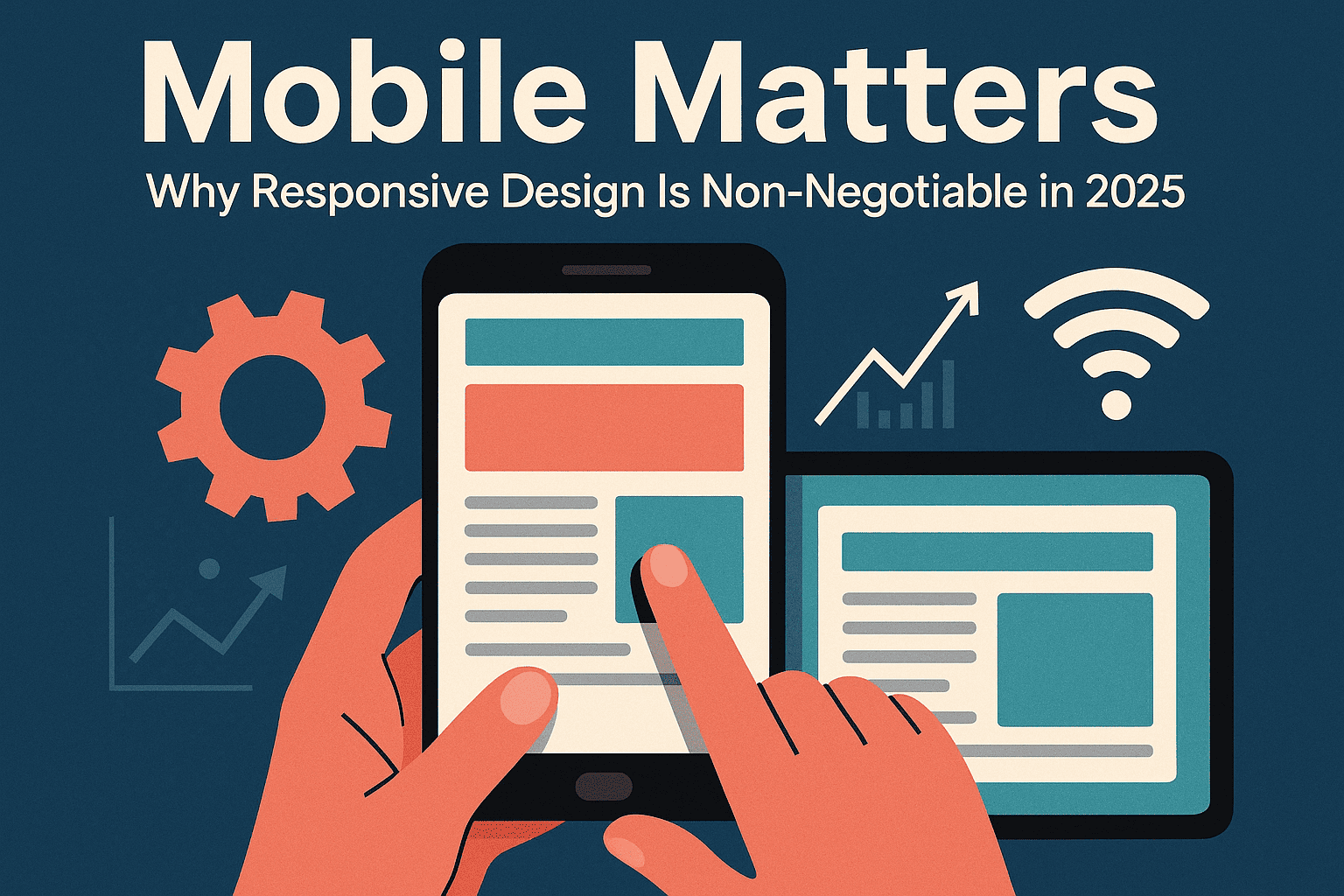
    • Mobile Matters: Why Responsive Design Is Non-Negotiable in 2025

      Mobile Matters: Why Responsive Design Is Non-Negotiable in 2025

      You know that moment when you’re curled up on the couch, dog on your lap, tea in hand, and you decide to finally buy that pair of shoes you’ve been eyeing for weeks? You open the link… and BAM. The website loads in desktop mode. On your phone. Tiny buttons, overlapping text, and a checkout process so confusing it feels like filing taxes.

      Friday, our office dog, looked genuinely concerned as I rage-scrolled with one hand and spilled chai with the other. That’s when it hit me—if your website can’t handle something as basic as responsive web design, you’re not just losing sales. You’re losing trust.

      In 2025, mobile-friendly website design isn’t up for debate. It’s the bare minimum.

      The Mobile Takeover (and Why It’s a Big Deal)

      People don’t “go online” anymore. They live online. And they do it from their phones. Whether they’re checking prices in a cab, comparing brands in a store, or stalking their ex’s new skincare routine, your website better look good and work better.

      A mobile-friendly website design ensures that your customer journey isn’t an obstacle course. It should feel like a seamless conversation—not a tech tutorial.

      Example: Nykaa

      Their mobile-first design doesn’t just sell beauty—it feels beautiful. Filters, reviews, swipe-to-shop—it’s as intuitive as putting on lip balm.

      Why Responsive Design Matters (and Why Ignoring It Is a Crime)

      Imagine walking into a store and the shelves are upside down, the lights flicker, and no one speaks your language. That’s what a badly built website feels like on mobile.

      Responsive e-commerce website design isn’t just a flex—it’s a function.

      Why responsive design matters:

      • Google rewards it. (Yes, SEO matters.)
      • Users expect it.
      • Your revenue depends on it.

      Example: Lenskart

      From virtual try-ons to a cart that doesn’t mysteriously empty itself, Lenskart’s mobile site is a case study in user-friendly website design done right.

      Benefits of Mobile-First Design: Clean, Clear, Clickable

      Designing for mobile first makes you prioritize what matters:

      • Load speed (because no one has 7 seconds anymore)
      • Scannable content
      • Thumb-friendly design
      • CTA buttons that don’t hide under carousels

      Benefits of mobile-first design go beyond aesthetics—they improve user experience and web design, boost conversion, and reduce bounce like a dream mattress.

      Good UX: The Difference Between a Visitor and a Customer

      User experience in web design isn’t about colors and curves. It’s about clarity.

      Want to convert website visitors into customers? Make it ridiculously easy for them to:

      • Find what they need
      • Know what to do next
      • Trust that their money is safe with you

      Example: Swiggy

      Their mobile site is so smooth, I accidentally ordered food while researching this article. Twice. That’s what high-converting website design looks like.

      Websites with Good UX Design: The Unsung Sales Reps

      We love a charismatic sales team, but here’s the truth—your digital brand presence is your real first impression. And your website? It’s the front desk, showroom, and checkout counter rolled into one.

      Websites with the best UX don’t make you think. They make you act.

      Example: Cult.fit

      From workout booking to gear shopping, their mobile design is so intuitive, you’ll finish leg day before you find a single glitch.

      Website Design for Mobile Devices: A Must-Have Checklist

      Your dev team should be thinking about:

      • Adaptive grids
      • Font legibility
      • Visual hierarchy
      • Button placement for thumbs, not mice
      • Fast load time even on flaky 4G

      And if they’re not? Time for a conversation. Maybe even a break-up.

      Example: Tata 1mg

      Whether you’re ordering meds or checking symptoms, their mobile site is reliable, fast, and fuss-free. A+ in mobile responsive web development.

      In Short

      Building websites in 2025 without responsive web design is like designing umbrellas that don’t work in rain.

      If you want to turn visitors into customers, your mobile experience has to work flawlessly. A good desktop site isn’t enough—it’s got to be a user-friendly website design that adapts, delights, and sells.

      Whether you’re in fashion, food, fitness or pharma—responsive web design, mobile-first thinking, and good user experience websites are the only way forward.

      Because let’s be honest—Friday’s already judging your site’s bounce rate. And she doesn’t even have thumbs.

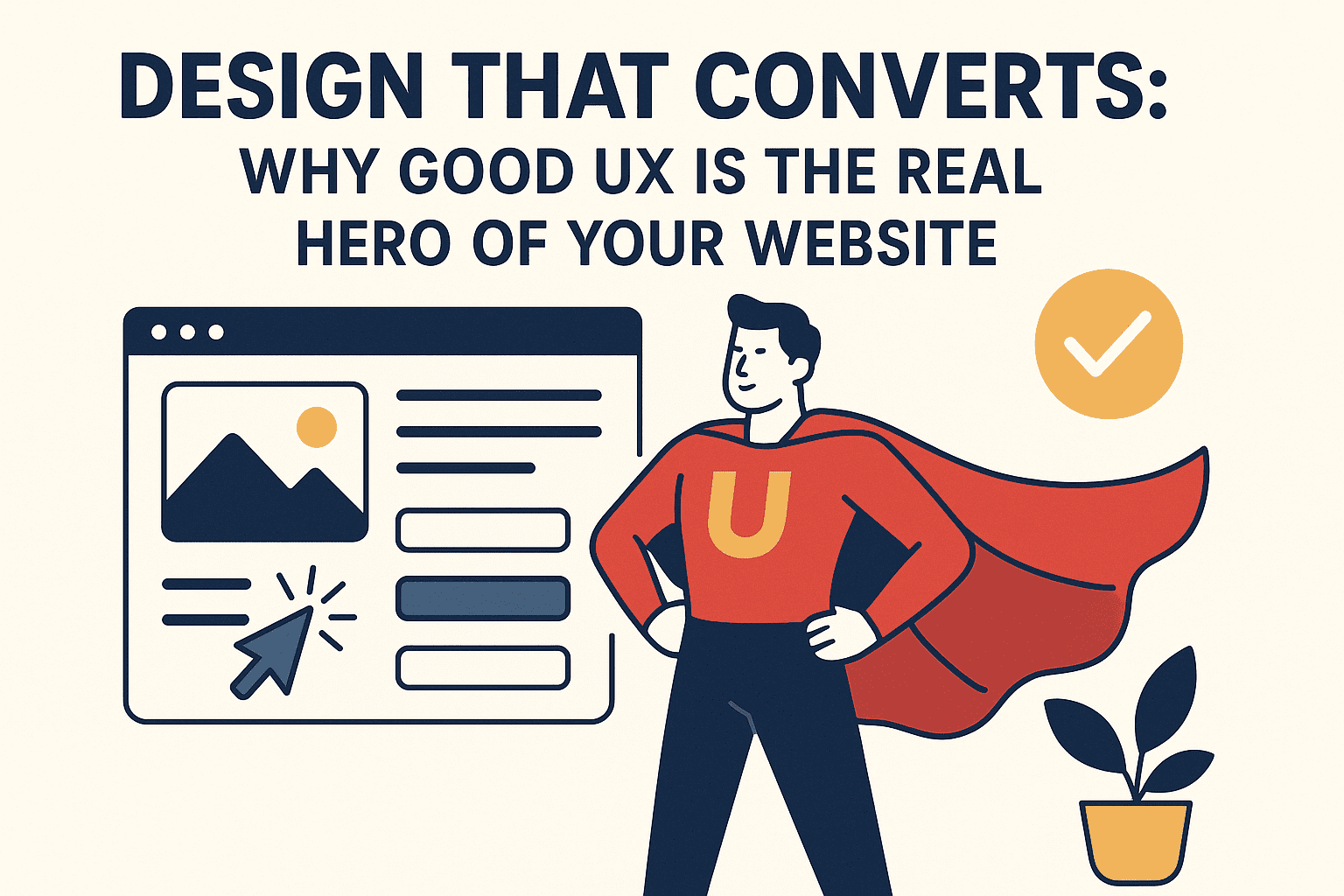
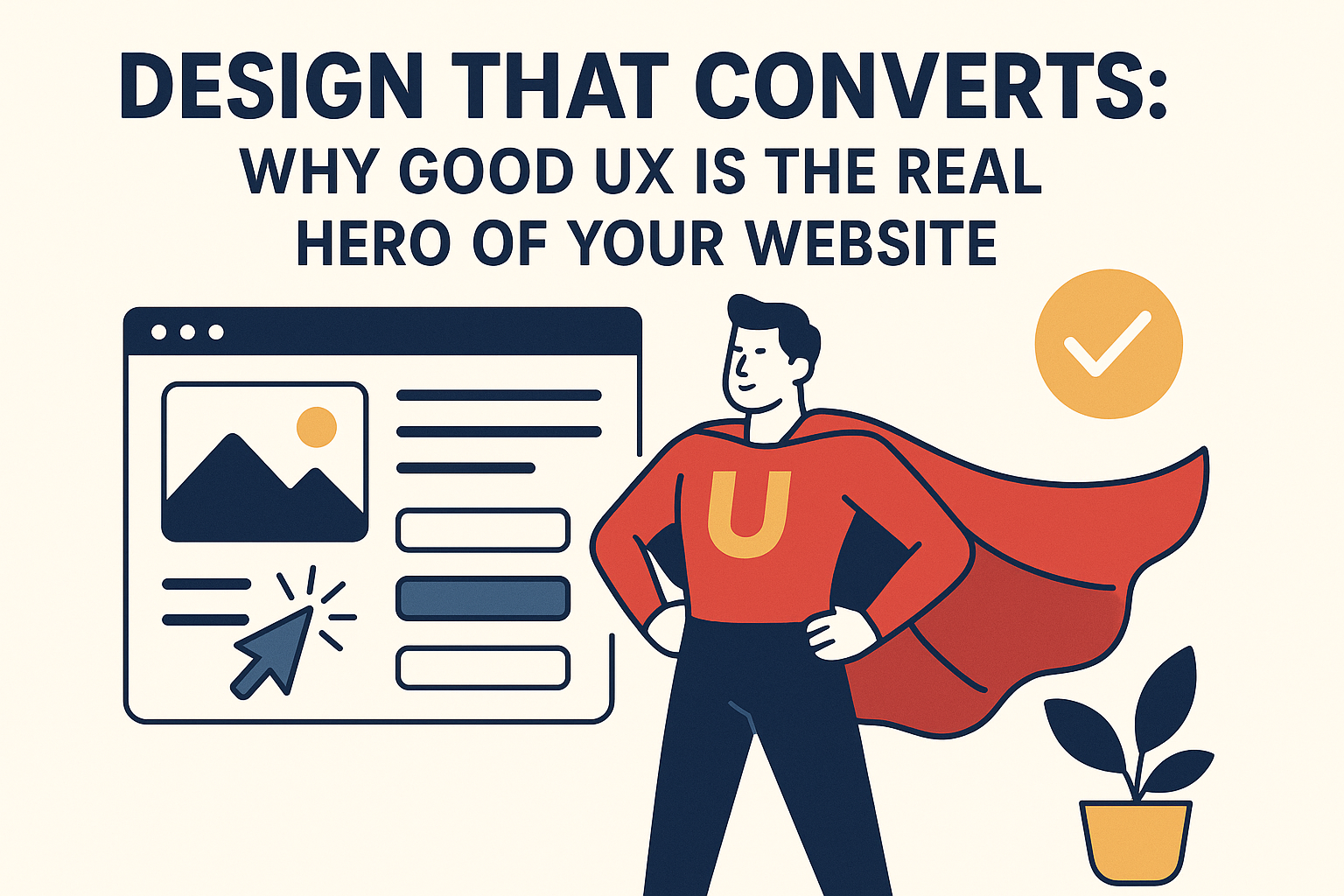
    • Design that Converts: Why Good UX Is the Real Hero of Your Website

      Design that Converts: Why Good UX Is the Real Hero of Your Website

      If your website is the digital face of your brand, user experience is the personality behind it. And trust us, people can tell the difference between charming and “something feels… off.”

      Too many brands treat user experience and web design like optional garnishes—”Oh, we’ll add some animations and hope it feels fancy.”

      But in the real world? Good user experience websites do the heavy lifting.
      They turn browsers into buyers, visitors into evangelists, and your bounce rate into a number you can actually share in meetings.

      What is UX and Why Should You Care?

      User experience in web design isn’t just about making things look pretty. It’s about designing a journey that’s so seamless, your users don’t even realise they’re on a journey. From the second someone lands on your homepage to the final click on your checkout page, every touchpoint matters.

      Great UX is:

      • Intuitive navigation
      • Clear CTAs (not 47 buttons that all say “Click here”)
      • Fast load times
      • Mobile-friendly layouts

      Think of Apple’s website. You don’t get lost. You don’t second guess. You float. That’s user experience and web design working hand in hand like besties on a mission.

      Good Design = Real Business Impact

      A high-converting website design isn’t just a creative flex. It’s a business asset.

      Let’s say you have 10,000 monthly visitors. If your website UX is poor and only 1% convert, that’s 100 customers. Improve your UX, double your conversion rate to 2%? Boom. 200 customers. No extra traffic needed.

      Airbnb is a classic example. When they redesigned their website with better UX in mind—cleaner filters, better booking flow, clearer photos—bookings skyrocketed. Because when it feels easy, people commit.

      From Visitor to Customer: The Journey

      You can’t just expect people to land on your site and instantly click “Buy Now.”

      You need to:

      • Greet them with clarity (no weird carousels with mystery messaging)
      • Earn trust (hello, reviews, clear policies, human language)
      • Make it easy to act (no 14-field checkout forms, please)

      Want websites with the best UX? Look at Dropbox or Notion. Both make signing up or exploring feel frictionless. They’re not trying to impress you with jargon. They’re trying to make your life easier. And that’s what converts.In short, if you want to turn visitors into customers, smooth the road for them. Simplify the journey. Make sure nothing gets in the way of the action you want them to take.

      Digital Brand Presence = Online Reputation

      Your website is your silent pitch. It’s selling when you’re sleeping. It’s building (or breaking) trust every time someone clicks a link.

      Digital brand presence isn’t just about being found. It’s about being remembered.

      If your site looks like it time-travelled from 2011 or feels like a puzzle no one wants to solve, your brand suffers. Period.

      And if you think a homepage filled with stock photos and a paragraph that starts with “We are a leading provider of solutions” is going to cut it—we need to talk.

      The ROI of UX

      Investing in user experience and web design gives tangible returns:

      • Lower bounce rates
      • Longer session durations
      • Higher customer satisfaction
      • More word-of-mouth referrals
      • And most importantly: you convert website visitors into customers.

      In fact, a Forrester study found that every $1 invested in UX brings $100 in return.


      Brands That Nail It

      • Duolingo: Gamified UX, friendly owl, fast onboarding. You want to keep going. That’s good user experience websites at work.
      • Zappos: Legendary for customer support, easy-to-navigate, filters that actually work. They don’t just convert website visitors into customers, they turn them into loyal fans.
      • Headspace: Soft colours, friendly tone, intuitive app and web UX. Even their error pages feel calming. Great websites with good UX design don’t just work, they feel good.
      • Narrative x Bima Central: When Narrative reimagined the website and email journey for Bima Central, a digital insurance platform by CAMSRep, the focus wasn’t on flashy design—it was on function. Clean layouts, clear CTAs, user-first structure, and trust-driven content led to higher engagement and action. The result? More users explored, clicked, and converted. That’s what a high-converting website design does: it delivers.

      In Short:

      A pretty site might get you a few compliments. A smart, user-friendly site gets you conversions.
      So if you’re trying to convert website visitors into customers and turn your digital brand presence into a lead-generating machine, it’s time to stop treating UX like an afterthought. Because the websites with the best UX? They’re not just nice to look at. They make money while you sip your coffee.

      Let your design work smarter—not harder.