A craft-centric film doesn’t shout about the product, it whispers. It lingers on the details, tunes into tiny sounds, and trusts the viewer to notice. Think less voice-over, more close-up. The goal? Let the product tell its own story through process, texture, and mood. In short: silent storytelling that lets visuals do the heavy lifting.
Why Quiet Works (and Why Your Audience Will Thank You)
Let’s be honest, people are tired of flashy, over-the-top ads. A pared-back, “quiet” film breaks through that noise. Those small tactile details-the grain of wood, the click of a button, the rhythm of a maker’s hands-stick in memory faster than any list of specs ever could.
Close-frame the craft. Micro-details are your hero shots. Less context, more texture. See BluestonePIM’s tips for “boring” products. Product centric video production thrives on this.
Use sound like punctuation. The click of a cap, the thrum of a motor recorded well, these are emotional hooks.
Pace like a human breathes. Hold the frame. Let the viewer inhale the scene. Minimal cuts let tactile moments land.
Bring UX into the film. If the product is digital, show interactions; if physical, show user touchpoints. Placeit’s minimalist video examples are instructive.
Go documentary, not demo. Use actual people, not actors, authenticity matters in craft centric films.
Retro-futurism gives you permission to be both comforting and audacious. It’s a way to say “we remember where we came from” while pointing to where you’re headed. But like all unique brand design concepts, it only works when it’s right for the category, the audience, and the message. If you’re designing a digital first brand identity that needs to land emotionally and move fast, this is a trend worth trying carefully.
Final thoughts
Quiet brand films and minimalist advertising films don’t whisper because they’re shy; they whisper because they know you’ll lean in.
Done with the art of visual storytelling, minimalistic brand films, and films that let the product speak, these productions turn every small detail into a moment of persuasion.
With careful craft centric film production and attention to silent storytelling in branding, you transform simple processes into a narrative that sells, letting your product take center stage, naturally.
Picture this: you walk into an Abercrombie store, and the smell hits you before you even spot the clothes. Or the slow, satisfying slide of an Apple box as you unbox a new phone.
That’s multisensory branding at work, a strategy that goes way beyond logos and fonts to create emotional brand connections you can actually feel.
Brands are finally realising: being seen isn’t enough. Sight may introduce your brand, but the senses make it unforgettable.
What Is Multisensory Branding?
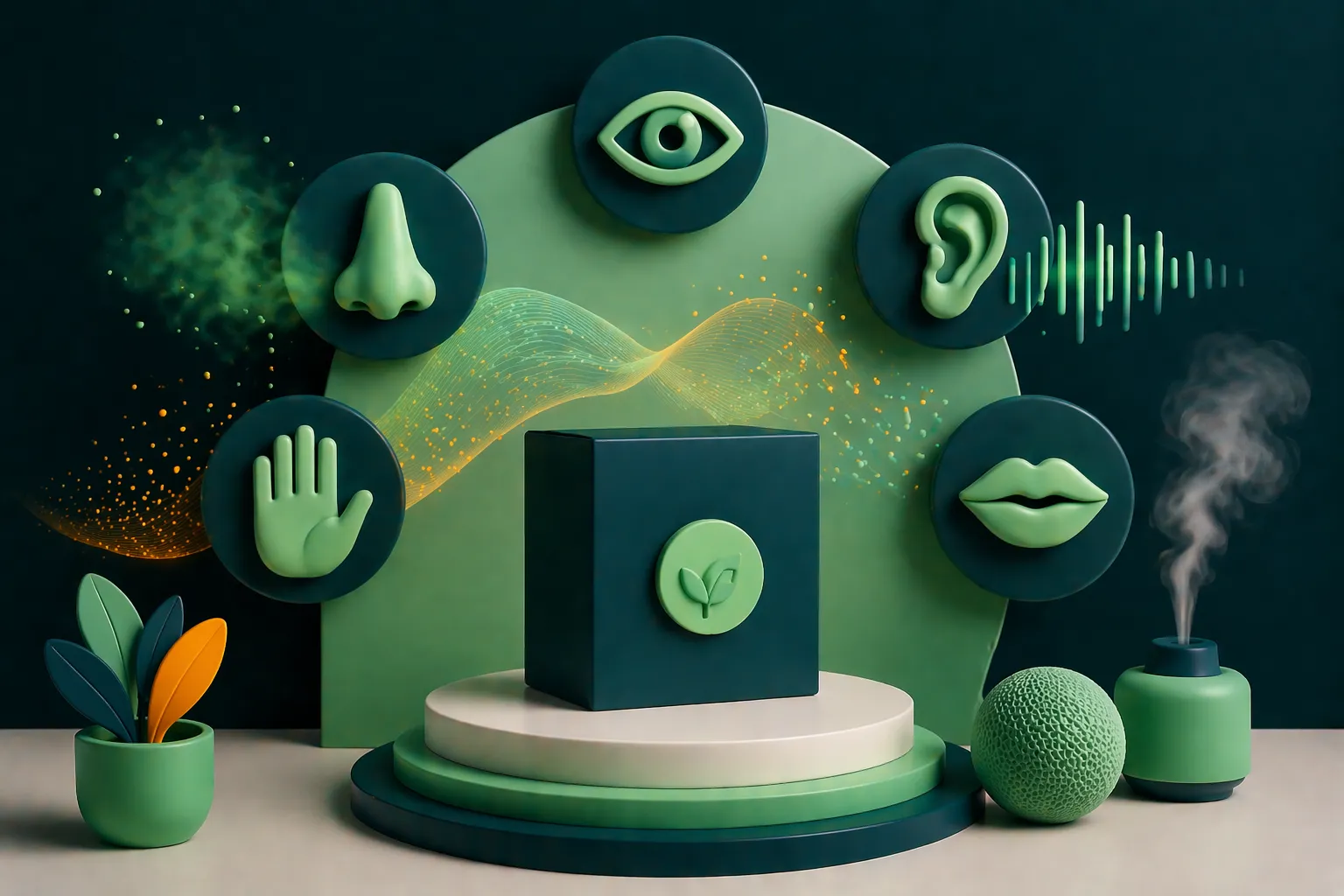
Multisensory branding is the art of designing brand experiences that hit more than one sense-sight, sound, touch, smell, and sometimes taste.
Instead of a single logo, think of it as a sensory signature. Your audience may forget what your ad looked like, but they’ll remember the sound of your app notification or the scent of your store.
Smell and sound bypass logic and go straight to emotion. Science says humans are 100 times more likely to remember a smell than a sight. One whiff or sound, and boom-your brand is instantly recalled.
Rolls-Royce even adds a signature scent to its car interiors to make every new car smell like a classic Rolls. That’s branding at a subconscious level: emotion first, logo second.
Sensory Branding Strategies That Actually Work
Here’s how brands are using sensory branding strategies to stand out:
Scented Logos: Starbucks stores smell like coffee heaven. That’s branding through aroma.
Sound and Touch in Branding: Bang & Olufsen spent months engineering the perfect “click” of their volume dials.
Packaging Texture: Chanel uses soft-touch finishes and heavy lids to make you feel luxury before you even open the product.
None of this is random. Every sense is carefully designed to make you feel something.
Storytelling in Multisensory Branding
Good branding tells a story, but great branding makes you feel it.
Take Lush: you can smell their stores from down the street. That’s not an accident, it’s part of their eco-friendly, playful brand story.
Or Harley-Davidson, which went as far as trademarking their engine sound. That roar doesn’t just say “motorcycle”-it says “freedom.”
Tactile Branding: Let People Feel Your Story
Touch is a branding superpower most companies ignore. The texture of a package, the weight of a product, even the way a box opens creates a memory.
Example: Montblanc pens feel substantial in your hand. That weight screams “premium.”
Apple’s slow, smooth unboxing experience isn’t just pretty, it’s designed to make the product feel worth every rupee.
Smell in Branding: The Most Underrated Tool
Smell is branding’s secret weapon. It’s emotional, instant, and impossible to ignore. Cinnabon places ovens near the front so the scent pulls you in.
Nike makes their stores smell like new shoes-because nostalgia sells.
Westin Hotels has a signature “white tea” scent that makes every hotel feel like home.
This is smell in branding at its best-subtle, powerful, and unforgettable.
Scented Logos Are a Real Thing
A scented logo is just like a visual logo, but for your nose. A custom scent becomes a brand’s signature. Luxury hotels and retailers are already investing heavily in scent marketing because smell creates trust and recognition faster than any ad ever could. even a video intro.
Why This Matters in 2025
We’re living in a hyper-visual world. Logos, ads, and content are everywhere. The brands that win are the ones that appeal to all senses.Sound and touch in branding give your brand personality. Smell adds depth. And together, these create a memory your audience won’t scroll past.
The Takeaway
Branding isn’t just what people see; it’s what they feel, hear, and smell.
Smart companies are using tactile branding, scented logos, and other sensory branding strategies to create a full experience that builds emotional brand connections customers can’t forget.
So, next time you plan a campaign, don’t just ask, “Does it look good?” Ask, “Does it feel good? Does it smell like us? Does it sound like us?” That’s how you create a brand no one forgets.
Close your eyes. What brand comes to mind when you hear a cheerful “ba-da-ba-ba-baa”? Or that iconic Netflix “ta-dum” before a new series begins? That’s not just sound. That’s strategy. That’s sonic branding. In a world where digital spaces are crowded with logos and visuals, brands are learning that identity isn’t only seen, it’s heard.
What Is Sonic Branding?
Simply put, sonic branding (or brand sound identity) is the strategic use of sound to represent a brand’s personality, values, and promise. Think of it as the audio version of a logo. Instead of a visual mark, it’s a melody, a tone, or even a rhythm that sticks in your memory. Intel’s iconic five-note jingle. Mastercard’s global sonic branding strategy, which plays the same sound cue in over 36 million retail environments.
Even the “whoosh” sound you hear when sending an email on Apple devices.
These are more than quirks, they’re brand assets.
The Psychology of Sonic Branding
Why does it work so well? Because our brains process sound faster than visuals. Studies show that humans respond to audio cues in 0.146 seconds, compared to 0.25 seconds for visuals. That’s a marketer’s dream: faster recall, stronger emotion.
The psychology of sonic branding lies in how sound bypasses logic and goes straight for emotion. It triggers nostalgia, builds trust, and sets expectations before you even see the brand name.
Example: When you hear HBO’s static “aaaaaaah” chord, you don’t just think of the brand, you anticipate high-quality storytelling.
Sonic Branding in Advertising
Here’s the truth: visuals can be skipped, muted, or scrolled past. Sounds? Much harder to ignore. That’s why sonic branding in advertising has skyrocketed.
Take Coca-Cola’s “open–fizz–ahh”. No logos, no faces, just sound. You could be on radio or in a crowded shop and still know it’s Coke.
Or look at Indian brands: Zomato’s delivery app chime. These sounds sneak into daily routines, becoming part of culture.
Sonic Branding Strategy: Beyond Jingles
A solid sonic branding strategy isn’t about creating a catchy tune and calling it a day. It’s about weaving sound into the entire brand ecosystem:
Multisensory branding: Combine visuals, sounds, and even haptics (think of Tesla’s subtle engine hum designed for pedestrians).
Consistency: Mastercard didn’t stop at ads; their sonic logo plays in-store, online, and even in their hold music.
Cultural nuance: Sounds that work in New York might not land in Mumbai. Brands like Nokia adapted their ringtone regionally to fit local tastes.
Examples of Sonic Branding You Didn’t Know You Knew
WhatsApp–That signature message ping. Netflix –Their tu-dum has become so iconic it even has its own fan remixes.
These subtle cues prove the power of sonic branding trends: moving from big jingles to everyday micro-sounds.
Why the Future Is Heard, Not Just Seen
As tech becomes more voice-first (hello, Alexa and Google Assistant), brands without a sonic brand identity will struggle to stand out. Imagine asking your smart speaker to order pizza, and instead of seeing logos, you hear:
Domino’s upbeat guitar strum
Pizza Hut’s familiar bell chime
One wins. One blends into silence.
That’s the future.
Takeaways for Brands
Sonic branding is not optional, it’s your brand’s invisible handshake.
Build a multisensory branding approach: sights, sounds, and maybe even touch.
Think beyond ads, integrate sounds into apps, websites, and physical spaces. Start small: a login chime, a product unboxing sound, or even a video intro.
Narrative’s Take on Sonic Identities with Purpose
At Narrative, we treat sonic branding with the same intent as a logo or tagline. Our approach is simple: the sound must be relevant to the brand, consistent across touchpoints, and create emotional recall strong enough to spark recognition without visuals.
A proud example is our collaboration with Grammy Award winner Ricky Kej to reimagine the Kannada classic Nade Mundhe for Invest Karnataka. The track gave the campaign a powerful cultural anchor, helping the brand connect with global investors while celebrating local identity and amplifying its reach far beyond borders.
Over to You
So the next time someone asks, “What is a sonic brand?” you’ll know it’s not just a catchy tune. It’s a strategy, an identity, and a science-backed advantage.
At Narrative, we help brands go beyond logos and slogans to build memorable multisensory identities. If you’d like to explore how your brand could sound, let’s talk.
You know that moment when you’re curled up on the couch, dog on your lap, tea in hand, and you decide to finally buy that pair of shoes you’ve been eyeing for weeks? You open the link… and BAM. The website loads in desktop mode. On your phone. Tiny buttons, overlapping text, and a checkout process so confusing it feels like filing taxes.
Friday, our office dog, looked genuinely concerned as I rage-scrolled with one hand and spilled chai with the other. That’s when it hit me—if your website can’t handle something as basic as responsive web design, you’re not just losing sales. You’re losing trust.
In 2025, mobile-friendly website design isn’t up for debate. It’s the bare minimum.
The Mobile Takeover (and Why It’s a Big Deal)
People don’t “go online” anymore. They live online. And they do it from their phones. Whether they’re checking prices in a cab, comparing brands in a store, or stalking their ex’s new skincare routine, your website better look good and work better.
A mobile-friendly website design ensures that your customer journey isn’t an obstacle course. It should feel like a seamless conversation—not a tech tutorial.
Their mobile-first design doesn’t just sell beauty—it feels beautiful. Filters, reviews, swipe-to-shop—it’s as intuitive as putting on lip balm.
Why Responsive Design Matters (and Why Ignoring It Is a Crime)
Imagine walking into a store and the shelves are upside down, the lights flicker, and no one speaks your language. That’s what a badly built website feels like on mobile.
Responsive e-commerce website design isn’t just a flex—it’s a function.
From virtual try-ons to a cart that doesn’t mysteriously empty itself, Lenskart’s mobile site is a case study in user-friendly website design done right.
Benefits of Mobile-First Design: Clean, Clear, Clickable
Designing for mobile first makes you prioritize what matters:
Load speed (because no one has 7 seconds anymore)
Scannable content
Thumb-friendly design
CTA buttons that don’t hide under carousels
Benefits of mobile-first design go beyond aesthetics—they improve user experience and web design, boost conversion, and reduce bounce like a dream mattress.
Good UX: The Difference Between a Visitor and a Customer
User experience in web design isn’t about colors and curves. It’s about clarity.
Want to convert website visitors into customers? Make it ridiculously easy for them to:
Their mobile site is so smooth, I accidentally ordered food while researching this article. Twice. That’s what high-converting website design looks like.
Websites with Good UX Design: The Unsung Sales Reps
We love a charismatic sales team, but here’s the truth—your digital brand presence is your real first impression. And your website? It’s the front desk, showroom, and checkout counter rolled into one.
Websites with the best UX don’t make you think. They make you act.
Whether you’re ordering meds or checking symptoms, their mobile site is reliable, fast, and fuss-free. A+ in mobile responsive web development.
In Short
Building websites in 2025 without responsive web design is like designing umbrellas that don’t work in rain.
If you want to turn visitors into customers, your mobile experience has to work flawlessly. A good desktop site isn’t enough—it’s got to be a user-friendly website design that adapts, delights, and sells.
Whether you’re in fashion, food, fitness or pharma—responsive web design, mobile-first thinking, and good user experience websites are the only way forward.
Because let’s be honest—Friday’s already judging your site’s bounce rate. And she doesn’t even have thumbs.
If your website is the digital face of your brand, user experience is the personality behind it. And trust us, people can tell the difference between charming and “something feels… off.”
Too many brands treat user experience and web design like optional garnishes—”Oh, we’ll add some animations and hope it feels fancy.”
But in the real world? Good user experience websitesdo the heavy lifting. They turn browsers into buyers, visitors into evangelists, and your bounce rate into a number you can actually share in meetings.
What is UX and Why Should You Care?
User experience in web design isn’t just about making things look pretty. It’s about designing a journey that’s so seamless, your users don’t even realise they’re on a journey. From the second someone lands on your homepage to the final click on your checkout page, every touchpoint matters.
Great UX is:
Intuitive navigation
Clear CTAs (not 47 buttons that all say “Click here”)
Fast load times
Mobile-friendly layouts
Think of Apple’s website. You don’t get lost. You don’t second guess. You float. That’s user experience and web design working hand in hand like besties on a mission.
Good Design = Real Business Impact
A high-converting website design isn’t just a creative flex. It’s a business asset.
Let’s say you have 10,000 monthly visitors. If your website UX is poor and only 1% convert, that’s 100 customers. Improve your UX, double your conversion rate to 2%? Boom. 200 customers. No extra traffic needed.
Airbnb is a classic example. When they redesigned their website with better UX in mind—cleaner filters, better booking flow, clearer photos—bookings skyrocketed. Because when it feels easy, people commit.
From Visitor to Customer: The Journey
You can’t just expect people to land on your site and instantly click “Buy Now.”
You need to:
Greet them with clarity (no weird carousels with mystery messaging)
Earn trust (hello, reviews, clear policies, human language)
Make it easy to act (no 14-field checkout forms, please)
Want websites with the best UX? Look at Dropbox or Notion. Both make signing up or exploring feel frictionless. They’re not trying to impress you with jargon. They’re trying to make your life easier. And that’s what converts.In short, if you want to turn visitors into customers, smooth the road for them. Simplify the journey. Make sure nothing gets in the way of the action you want them to take.
Digital Brand Presence = Online Reputation
Your website is your silent pitch. It’s selling when you’re sleeping. It’s building (or breaking) trust every time someone clicks a link.
Digital brand presence isn’t just about being found. It’s about being remembered.
If your site looks like it time-travelled from 2011 or feels like a puzzle no one wants to solve, your brand suffers. Period.
And if you think a homepage filled with stock photos and a paragraph that starts with “We are a leading provider of solutions” is going to cut it—we need to talk.
The ROI of UX
Investing in user experience and web design gives tangible returns:
Lower bounce rates
Longer session durations
Higher customer satisfaction
More word-of-mouth referrals
And most importantly: you convert website visitors into customers.
In fact, a Forrester study found that every $1 invested in UX brings $100 in return.
Brands That Nail It
Duolingo: Gamified UX, friendly owl, fast onboarding. You want to keep going. That’s good user experience websites at work.
Zappos: Legendary for customer support, easy-to-navigate, filters that actually work. They don’t just convert website visitors into customers, they turn them into loyal fans.
Headspace: Soft colours, friendly tone, intuitive app and web UX. Even their error pages feel calming. Great websites with good UX design don’t just work, they feel good.
Narrative x Bima Central: When Narrative reimagined the website and email journey for Bima Central, a digital insurance platform by CAMSRep, the focus wasn’t on flashy design—it was on function. Clean layouts, clear CTAs, user-first structure, and trust-driven content led to higher engagement and action. The result? More users explored, clicked, and converted. That’s what a high-converting website design does: it delivers.
In Short:
A pretty site might get you a few compliments. A smart, user-friendly site gets you conversions. So if you’re trying to convert website visitors into customers and turn your digital brand presence into a lead-generating machine, it’s time to stop treating UX like an afterthought. Because the websites with the best UX? They’re not just nice to look at. They make money while you sip your coffee.
If your website were a person, would you trust them with your credit card?
Let’s get real, your website is your brand’s first impression. It’s the 24/7 spokesperson, the always-on sales rep, the digital front desk. And when you’re not around to pitch, clarify, or charm your audience, your brand’s online presence has to do all that heavy lifting (silently).
So, the question is: what exactly is your website saying about your brand?
Your Website is your Brand’s First Impression
You have 5 seconds to make someone care. And that’s generous.
Whether you’re a D2C skincare brand, a tech startup, or a government forum, your website is often the first interaction people have with your brand. A cluttered homepage, confusing navigation, or tone-deaf messaging? It all translates to one thing: this brand doesn’t know what it’s doing.
Example: Compare Apple’s website with your average electronics e-retailer. One sells a lifestyle. The other sells USB cables. That’s not just design. That’s a sharp website communication strategy.
The Power of Website Communication Strategy
Think of your website copy and structure as a script. Who are you talking to? What do they need to hear? What do you want them to do next?
Your website communication strategy should feel like a conversation, not a monologue. That means no jargon-filled paragraphs, no stock image overload, and definitely no “Welcome to our website” headers. Nobody has time for that.
Example: Basecamp nails this. Their homepage isn’t just clean, it’s smart. It tells you what they do, how it helps, and what to click next. No fluff, just facts.
From Visitor to Customer: Bridging the Conversion Gap
Getting traffic is one thing. Converting visitors into customers is a whole different game.
You can’t throw a form on a landing page and hope people magically sign up. You need to build trust, guide attention, and reduce friction. Every button, headline, testimonial, and visual cue should serve one purpose: conversion.
Example: Dropbox Business does this well. Their call-to-actions are visible, benefits are crystal clear, and social proof is subtle but strong. That’s how you convert website visitors into customers with intention, not hope.
Your Brand’s Digital Presence is a Daily Interview
Here’s the harsh truth: your site is constantly being judged.
Every time someone lands on your page, be it a prospective client, investor, journalist, or job candidate, they’re forming an opinion. A slow site? Outdated design? Vague messaging? All red flags.
Your brand digital presence is not just about SEO or aesthetic. It’s about signaling credibility. The web is noisy. And in that chaos, clarity wins.
Example: Our team at Narrative Asia helped Invest Karnataka reimagine their digital face for the Global Investors Meet 2025. The new site communicated inclusive, resilient, and tech-forward growth,positioning Karnataka as a global thought-leader.
The UX–Trust Equation
Want to be taken seriously? Then make your site easy to use
User experience and brand trust go hand in hand. If your navigation feels like a maze or your checkout process feels like tax season, users will bounce faster than your retargeting pixel can blink.
Clean structure. Mobile-first design. Fast load times. Accessible layouts. These aren’t just design choices, they’re trust signals.
Example: Airbnb doesn’t just look pretty. It works flawlessly. Whether you’re a host or guest, the interface anticipates your next move. That’s smart UX built for conversion and confidence.
In Short
Your website is not a brochure. It’s your silent pitch. It should speak with clarity, guide with purpose, and build trust without needing a “Let us explain” tab. Whether your goal is awareness, lead-gen, or sales, your website is where it either happens or doesn’t.
So next time you’re reviewing your site, ask: Would I trust this site with my own time, money, and attention?
If the answer’s no, then it’s time to stop treating your website like a digital checkbox and start treating it like the frontline of your brand. And if you’re wondering who can help you get there, we’re proud to be named among the Top 5 Web Development Agencies in Bangalore.
And if you’d like to create a website that truly works for your brand, get in touch with us.
“If your marketing campaign feels like throwing glitter at a fan and hoping it sticks, this one’s for you.”
Let’s be honest, anyone can make a campaign look good. Throw in some flashy visuals, a punchy headline, maybe a celebrity talking about “authenticity,” and boom, people might notice.
But without strategy? It’s just an expensive cake with decoration and no taste.
Strategic thinking in marketing isn’t just a line on your pitch deck. It’s the reason some brands launch with impact, while others fizzle before the first click.
Before you panic: no, this isn’t a manifesto against creativity. This is about pairing creative campaign strategy with serious brains. You need ideas that sing and systems that scale.
The best campaigns are equal parts heart and head. They don’t just show up on your feed—they show up with intention. And that’s the power of strategic brand communication: it gives creativity a purpose and performance a plan.
Example: Dove’s “Real Beauty” campaign wasn’t just a pretty face. It was backed by strategic insights around representation and self-esteem, turning emotional truth into global engagement.
From Chaos to Cohesion: The Role of Integrated Strategy
Let’s talk alignment.
A billboard in Kormangala (that’s in Bangalore btw). A reel in someone’s bathroom scroll zone. A jingle on Spotify. If they’re not singing the same tune, you’re just spamming people in stereo.
A good integrated campaign strategy connects every touchpoint from offline to online with a single thread. That’s the magic of an integrated marketing campaign: it’s not about being everywhere, it’s about being everywhere with a point.
Example: Nike’s “You Can’t Stop Us” united TV, social, digital, and athlete activations under a single, powerful story.
Strategy That Starts With Story
You don’t need another trend. You need a story.
Enter: brand storytelling strategy. This is where your campaign stops being a sales pitch and starts being a narrative your audience can step into. What do you stand for? What problem are you solving? Why should anyone care?
If your answers sound like your competitor’s LinkedIn summary, you’re not doing it right. Strategy is what turns those answers into emotional anchors.
Example: Airbnb’s “Belong Anywhere” repositioned the entire brand around emotional storytelling instead of just bookings.
But… What Does Strategy Actually Do?
Glad you asked. Let’s break it down.
A solid strategy helps:
Define your north star (no more aimless creativity)
Clarify your audience (no more talking to “everyone”)
Set real goals (not “go viral”)
Build a roadmap (hello, campaign performance optimisation)
This is the difference between a one-hit wonder and a high-impact brand campaign.Example:Spotify Wrapped is strategy and storytelling in perfect sync built on user data and designed for shareability.
The ROI of Smart Strategy
If you’ve ever had a client ask, “So… what did this campaign actually do?” you already know how valuable strategy is.
Here’s how to improve campaign performance without resorting to desperate budget boosts:
Start with insights, not assumptions
Marry emotion with data
Optimise based on actual behaviour, not wishful thinking
This is where effective brand communication meets analytics. Strategy makes sure your message lands—again and again.
Real Talk: What Strategic Thinking Looks Like in Action
Let’s say you’re launching a new product. You could:
Make a flashy launch film, drop it on YouTube, and pray.
OR you could build a creative campaign strategy that includes influencer teases, email anticipation, in-store storytelling, and post-launch nurture loops.
Guess which one performs better?
The best strategies aren’t just creative, they’re layered. They give your campaign space to breathe, evolve, and sell long after launch day.
Example:Apple’s product launches are strategic theatre, every detail is designed for engagement, coverage, and conversion.
Okay, But How Do I Actually Build Strategic Campaigns?
Some quick-fire rules to keep you grounded (and sane):
Think audience-first, not brand-first. Your user doesn’t care how clever your tagline is if it doesn’t solve their problem.
Be ruthlessly consistent. Great strategy survives five platforms, six formats, and seven stakeholders.
Use data—but don’t lose soul. Insights are ingredients, not the recipe.
Always optimise. Always. If your campaign’s flying blind after launch, you’re burning money.
The ultimate flex? A data-driven marketing campaign that makes people feel and click.
In Short
Without strategy, you’re gambling. With it, you’re building.
Because let’s be honest, creativity gets attention. Strategy gets results. And when the two work together? You’ve got a campaign that doesn’t just go viral, it goes places.
That’s the difference between forgettable fluff and brand-building gold.
So the next time you’re tempted to jump into execution mode, take a step back. Ask the big questions. Find the human truth. Build the plan. Then execute with fire.Because in the end, anyone can make a campaign.
If your campaign involves Comic Sans, a pun on “going viral,” and a vague CTA like “Check it out,” please step away from the whiteboard and go take a nap. You’re tired. Your audience is too.
The truth is, building creative marketing campaigns today is like trying to go viral at a dinner party, there’s a very fine line between magnetic and mortifying. And the brands who nail it? They know one thing: campaigns aren’t just content. They’re architecture.
They’re built to stick. Built to sell. And most importantly, built to scale.
Take Wildcraft’s “Hello Outdoor” campaign, for instance, a 360° strategy by Narrative that tapped into post-lockdown emotions and positioned the brand as the ultimate enabler of outdoor joy. It wasn’t just a campaign; it was a well-timed sentiment turned into scalable storytelling.
Let’s break that down.
Start With a Spine, Not a Moodboard
The average campaign today dies in a brainstorm. Why? Because we chase the vibe instead of the why.
Good campaigns aren’t just pretty. They’re purposeful. That’s the difference between something that looks nice and something that moves the needle.
What does this take? A real, working core idea and the ability to adapt it into integrated brand campaigns that feel seamless across every platform, every asset, every medium.
Your audience should never feel like they’re meeting five different versions of you depending on whether they see your ad on Instagram or in an email.
Spoiler alert: consistency is credibility.
Example: Apple’s “Shot on iPhone” campaign. The concept adapts flawlessly across billboards, web, packaging, and social.
Performance-Driven Advertising: The Art of Not Guessing
Raise your hand if you’ve ever launched a campaign with fingers crossed and a prayer to the algorithm gods. Now put your hand down and open your dashboard.
Performance-driven advertising isn’t just for growth marketers, it’s the secret weapon of every good creative team. Because the only thing sexier than a killer concept is a killer concept that works.
We’re talking CTRs that make your CMO weep with joy. Engagement that actually means something. Sales that show up in the real world, not just the pitch deck.
How? Simple: you test it. You track it. You tweak it. That’s where campaign performance optimization earns its keep.
Let’s say it louder for the folks in the pitch room: data doesn’t kill creativity, it sharpens it.
Brands that understand this are thriving. Because they’re not throwing spaghetti at the wall anymore. They’re cooking with recipes that already work, then adding just the right seasoning to make it their own.
A data-driven marketing campaign lets you marry emotional storytelling with behavioral insights. You know what your audience clicks, shares, saves, skips and you use that to build something smarter. Something that doesn’t just look good on a billboard but works in a carousel, an email, a YouTube pre-roll, or even on the side of a bus.
That’s what multi-channel advertising campaigns are all about, meeting people wherever they are, without losing your voice along the way.
Example: Netflix’s data-driven recommendations and creative localization in marketing.
Storytelling in Advertising: The Underrated Sales Funnel
Let’s get something straight. Storytelling isn’t fluff. It’s a function.
Why do people cry over a gum commercial or feel personally victimized by a tea ad? Because storytelling in advertising hits the limbic brain, the part that makes us feel something before we even process why.
And when stories align with strategy? That’s absolutely magical.
Whether it’s a 30-second Instagram reel or a 3-minute brand film, the structure remains:
Problem → Tension → Resolution → Brand.
You’re not just describing a product. You’re narrating a transformation. (And, yes, that includes selling toilet paper. Everyone’s got a story.)
Not every brand needs a big scale ad. Some just need a smart, sharp idea with legs.
That’s why custom brand marketing solutions matter. Cookie-cutter campaigns are easy to spot and even easier to ignore. What you need is creativity that fits your tone, your audience, your moment and ideally, doesn’t look like it was built off a Canva template from 2015.
Whether you’re launching a brand refresh or rolling out your 10th product line, tailor the execution. Target the insight. Build for impact.
Example: Nike’s custom campaign “You Can’t Stop Us” focused on diverse audience segments.
A Creative Digital Campaign Should Work Harder Than Your Sales Team
Digital’s the playground, but most brands are still playing it safe. A creative digital campaign should stop scrolls, start conversations, and start an action. That’s a tall order, but with the right hook and format mix—video, motion graphics, memes (yes, memes)—it’s possible.
Think Spotify Wrapped. Think Cadbury’s personalized Diwali campaigns. Think Zomato’s push notifications that feel like they were written by your funny, slightly toxic ex.
That’s creative. And it converts. Example: Spotify Wrapped’s personalized user campaigns.
Don’t Sleep on the Offline Stuff
In a pixel-first world, going offline might feel retro. But don’t confuse vintage with ineffective.
The best digital and offline brand campaigns work in tandem. What people see on a hoarding should echo in their Instagram feed. What they hear on the radio should click when they hit your landing page.
Because audiences don’t live on just one channel and your campaign shouldn’t either.
-It’s consistent and cross-platform (integrated brand campaigns). -It blends emotion with evidence (performance-driven advertising). -It uses insights, not assumptions (data-driven marketing campaigns). -It’s tailored, not templated (custom brand marketing solutions). -It moves with your audience (multi-channel advertising campaigns). -And it tells a damn good story (storytelling in advertising).
That’s the stuff that sticks. That’s the stuff that sells.
In Short In a world where your audience sees 10,000 ads a day (and remembers maybe three), you can’t afford to be forgettable. Your campaign has to punch above its weight not just to grab attention, but to earn trust and drive action.
Whether it’s one platform or ten, digital or physical, campaign planning isn’t about ticking boxes. It’s about building ideas that last longer than a scroll.
So if you’re ready to craft campaigns that actually perform campaigns that stick, sell, and scale, maybe it’s time we talked.Because at Narrative Asia, we don’t just make noise. We make meaning.
If your campaign says ‘We’re here for you’ but your customer service holds me hostage for 48 minutes to speak to a bot, you don’t need an ad, you need therapy.
Let’s call it like this. People are tired. Tired of empty slogans. Tired of perfect stock photos of smiling families holding salad bowls. Tired of brands telling them how much they “care” while ghosting them on DMs.
And yet every now and then, a campaign slips through that actually makes you feel something. A commercial that doesn’t just try to sell you shampoo, but sells you a story. That’s emotional marketing. And it works because it’s real. It doesn’t feel like a forced pitch. It feels like a conversation with your friend. Take Bima Central’s email campaign we did, it didn’t scream “buy now,” it simply showed up with clarity, empathy, and just enough nudge to feel like help, not hard sell.
Why Campaigns Need Emotional Connection
You could have the best product in the world. But if your brand comes across like a robot with a LinkedIn profile, nobody’s sticking around.
In today’s world, relatability > reach. Audiences crave honesty, vulnerability, and yes, a little bit of humour. That’s where human-centric advertising comes in.
Brands that get this build loyalty, not just traffic.
Creative Brand Campaigns That Got It Right
Let’s talk winners:
Apple – “The Greatest” An inclusive, powerful ad showing people with disabilities using Apple products. No dialogue. Just real people, real moments. Barbie – The 2023 Campaign Nostalgia, identity, existential crises wrapped in pink. This wasn’t just movie marketing. It was a movement. Dove – “Real Beauty”Showed women as they really are not how Photoshop makes them. It hit home. Each of these are human-centric campaigns rooted in real stories, not slogans.
What Most Brands Get Horribly Wrong
Let’s be honest:
They chase trends instead of truths.
They confuse mood boards for messaging.
They slap sad piano music on a montage and call it “impactful.”
The result? Glossy, expensive ads that feel… nothing. Because they say a lot, but mean very little.
Human Truths in Advertising: What That Actually Means
It means starting from the real stuff—frustrations, joy, insecurity, pride. Not from what looks good on a billboard.A brand communication service worth its salt will ask, “What’s the emotional undercurrent here?” Not just, “What colours are on-trend this quarter?”
How to Start Telling the Truth (and Still Sell Things)
You don’t have to choose between emotion and sales. That’s a false choice. The smartest brands do both.
Here’s how:
Lead with a feeling, not a feature.
Make it specific. Not “we care,” but show me how you care.
Use humour, vulnerability, or honesty but only if it’s true.
Don’t shout. Speak like a human.
Because brand communication services today need less jargon and more gut-punch.
In short
We live in the age of cynicism. People can smell inauthenticity from a mile away. That’s why great advertising doesn’t just inform—it connects. It listens. It tells the truth.
So next time you plan a campaign, ask yourself: Are you giving people a pitch—or a pulse?
Because the best creative brand campaigns aren’t just clever. They’re honest. And in a world of noise, honesty is the loudest thing you can say.That’s emotional economics. And that’s what we do at Narrative Asia.
If content is king, video is the throne. And not just any video, the right one, in the right format, at the right time. Because let’s be honest , in a world where we scroll faster than we think, your brand has mere seconds to make someone care.
That’s where short-form video marketing, brand film production, and a smart video content strategy come in.
This blog is a no-bluff, rather it’s a slightly cheeky guide to choosing between a zippy reel or an incredible brand film and when to use what.
The Brand Film
Branded short films are basically your Netflix moment where you will think of brand storytelling videos as your Oscar submission where your values, purpose, and big “why” shine. These long-form, emotional, cinematic pieces help your audience understand not just what you do but who you are.
Reels for business are quick, fun, and algorithms push them. Perfect for short videos marketing, they stop the scroll with punchy visuals and bold hooks. Think of them as the teaser trailer for your brand, just add scroll-stopping content to it.
A branded short film blends entertainment and message. You’re not selling directly, you’re making people feel something. And when they feel, they remember. These are ideal when you want to build long-term connections, not just clicks.
Long Form vs Short Form: The Great Attention Span Debate
Long-form vs short form video boils down to intention. Here’s the tea:
Long-form is usually 60 sec–3 mins which builds narrative, emotional impact in the audience. Where in Short-form is usually under 30 secs which are High reach, and definitely more chances of high shareability.
The trick? It’s not either-or—it’s both, strategically sequenced. Start with a Reel, follow with a product film, retarget with a testimonial. That’s how video content strategy works.
Size Doesn’t Matter
Different platforms have different vibes. You need to understand what fits the most, or sometimes all. Instagram reels are vertical, mostly below 30 seconds.
LinkedIn is all about Talking head, to the point and no bullshit. YouTube can be used for both long form brand videos and shorts, they have it all, it is up to you to decide what can work best for the brand.
It’s not just about cropping. It’s about context.
Example: Shopify’s vertical video series on entrepreneur tips.
Creative Vertical Video
Creative vertical video isn’t a compromise. It’s a canvas. Done right, vertical content can be just as cinematic and compelling as traditional formats—just faster and more efficient. They’re best for product teasers, testimonials, team intros, trend-driven posts.
Marketing Video Types : Choosing the Right Tool for the Job
There’s no one-size-fits-all when it comes to video. Each type serves a different purpose and knowing when to use what can make your content work a lot harder.
Here’s a breakdown
Brand Films
These are big-picture, high-impact videos that express your brand’s purpose, values, and personality. They’re made to connect emotionally, not just inform. Great for shaping perception and telling your brand story in a meaningful way. Use for: Brand launches, rebrands, investor decks, or your homepage hero section.
These videos break down what your product or service does in a clear and simple way. They’re practical, helpful, and great for building understanding. Use for: Landing pages, sales pitches, onboarding, or paid ads.
Short, sharp, and made to stop the scroll. Reels are perfect for quick messages, behind-the-scenes content, or hopping on trends. They’re all about grabbing attention and staying visible on social media. Use for: Instagram, LinkedIn, YouTube Shorts—anywhere you want to stay top of mind.
Example: Morning Brew uses short-form videos to deliver business news with wit and clarity.
Testimonials
Let your customers speak for you. Testimonial videos show real people sharing their real experiences, which makes them a powerful trust-builder. Use for: Website, lead nurturing, email marketing, or closing deals.
These are the high-energy, bold pieces that kick off new initiatives. Think product drops, rebrands, new services—anything where you want buzz and momentum from day one.
Each of these video types supports a different stage of your content journey. When planned together, they create a strategy that moves people from awareness to action, without ever feeling like a hard sell.
Storytelling Through Video
People don’t remember data, they remember stories. That’s why storytelling through video works. It takes your message and turns it into a moment. One that sticks. One that spreads. Whether you’re making them laugh, cry, or say “wait, who made this?”—you’re building connections, not just clicks.
In Short
In a world of content fatigue, video is your shortcut to attention and connection. Whether it’s a 15-second Reel or a full-blown brand film, the format isn’t just a creative decision; it’s a strategic one.
Brands that get this right don’t just create noise, they create meaning. Because in the end, the scroll only stops when the story starts.
Make them stop. Make them care. Make it with Narrative Asia.